Why Solid Wood Furniture Outlasts MDF Every Time
If you have ever bought a flat-pack piece of furniture and watched it warp, chip, or fall apart within a few years, you already know the answer intuitively. But when you are standing in front of two tables - one solid wood, one MDF - and the price difference is significant, it helps to understand exactly what you are paying for. This post breaks down the real difference between solid wood and MDF, and why it matters more than most buyers realise.
What Is MDF, Exactly?
MDF stands for Medium Density Fibreboard. It is an engineered wood product made by breaking down wood residuals into fine fibres, mixing them with resin and wax binders, and pressing them together under high heat and pressure. The result is a smooth, uniform panel that is easy to cut, paint, and manufacture at scale.
It is not inherently a bad material. For certain applications, as built-in cabinetry, painted shelving, or internal structural elements, it does the job. The problem is when MDF is used for furniture that is expected to last, flex with daily life, and age gracefully. That is where it consistently falls short.
The Real Differences Between Solid Wood and MDF
Durability and Lifespan
Solid wood furniture, properly maintained, lasts generations. There are dining tables and dressers in Portuguese homes that are over a hundred years old and still in daily use. MDF, by contrast, begins to deteriorate within a few years under normal household conditions, especially in areas with humidity fluctuations, which are common in Portuguese homes near the coast.
MDF swells when it absorbs moisture. Once the surface coating cracks or chips - from a knock, a scratch, or simply wear - moisture gets in and the board begins to break down from the inside. It cannot be repaired the way solid wood can.
Repairability
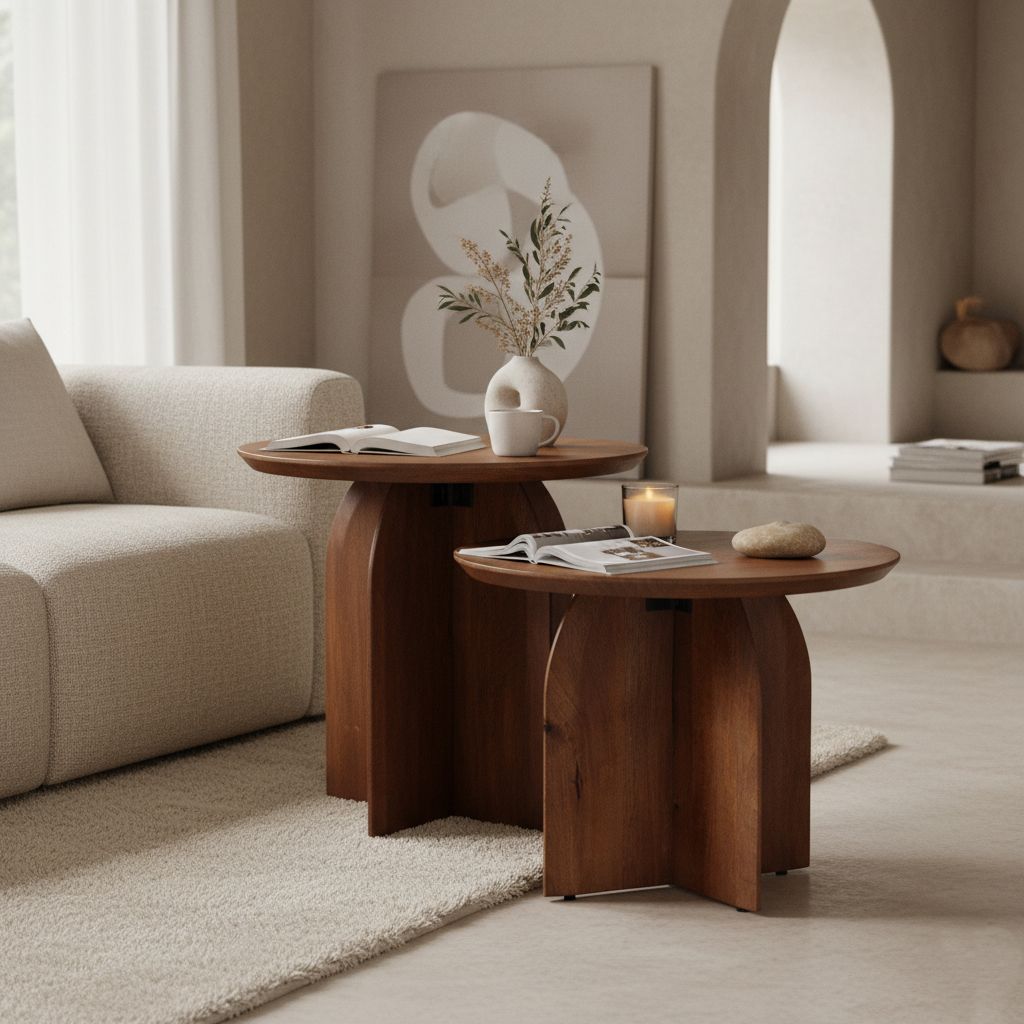
This is one of the most overlooked differences. Solid wood can be sanded, re-oiled, refinished, or repaired by any carpenter. A scratch on a solid oak table can be buffed out. A deep gouge can be filled and sanded smooth. The piece can be completely refinished to look new.
MDF cannot. Once the veneer or paint coating is damaged, the repair is almost always visible. You cannot sand MDF back without destroying the surface. Most people simply replace the piece, which is exactly what fast furniture brands are counting on.
Weight and Structural Integrity
Solid wood has a natural grain structure that gives it tensile strength across multiple directions. It flexes slightly under load rather than cracking. MDF is dense but brittle - it holds screws poorly, especially near edges, and is prone to snapping under impact rather than bending.
Anyone who has tried to reassemble a flat-pack piece after moving house knows this problem well. The screw holes strip, the joints loosen, and the piece never quite goes back together the way it came apart.
Appearance Over Time
Solid wood ages beautifully. The natural grain deepens with use, oils develop a patina, and the piece acquires a character that no new furniture can replicate.
MDF ages poorly. The surface dulls, chips at the edges, and the uniformity that made it look clean when new starts to look artificial and worn. There is no patina - only deterioration.
The Environmental Argument
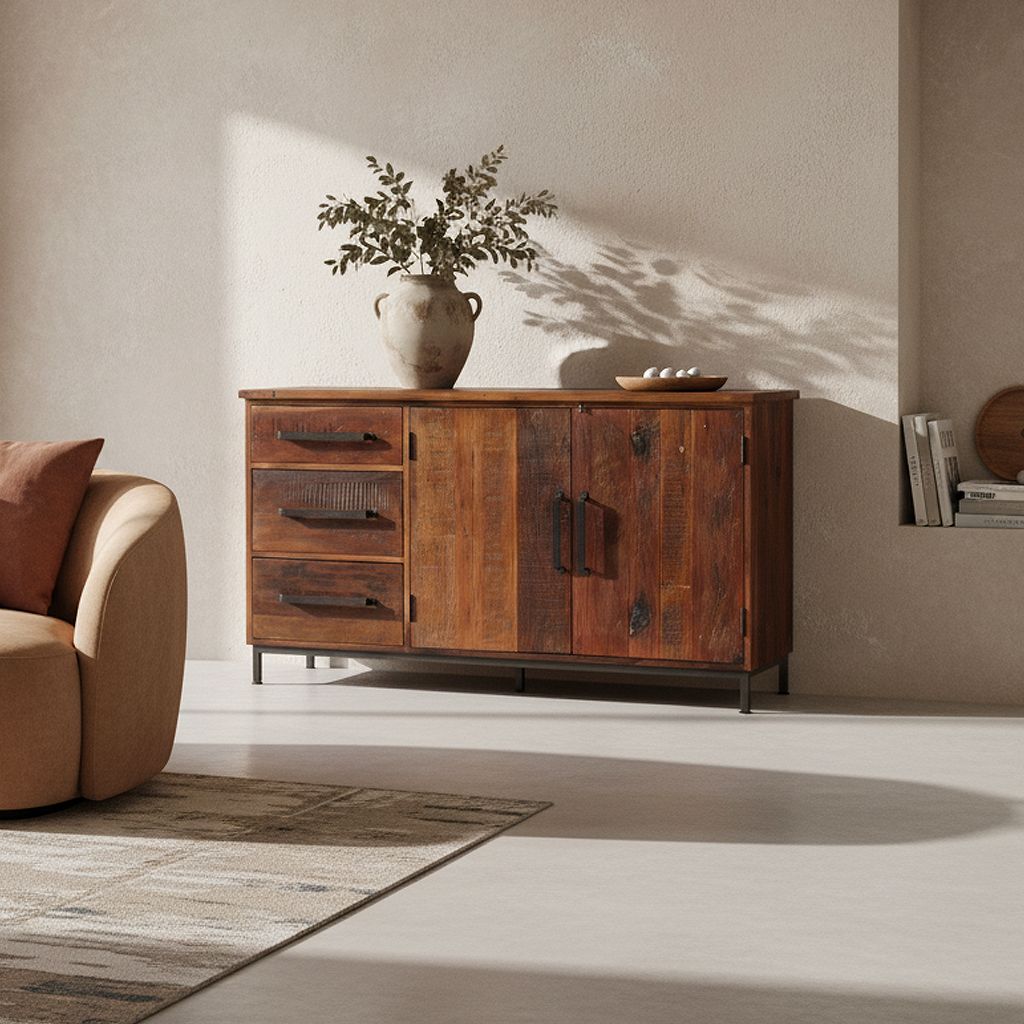
Solid wood furniture, when sourced responsibly, is one of the most sustainable choices you can make for your home. Wood is a renewable resource. A well-made solid wood piece that lasts fifty years has an infinitely smaller environmental footprint than five MDF replacements over the same period.
MDF production uses formaldehyde-based resins that off-gas VOCs (volatile organic compounds) into your home for months or years after purchase. Most MDF furniture is also non-recyclable, it goes straight to landfill at the end of its life.
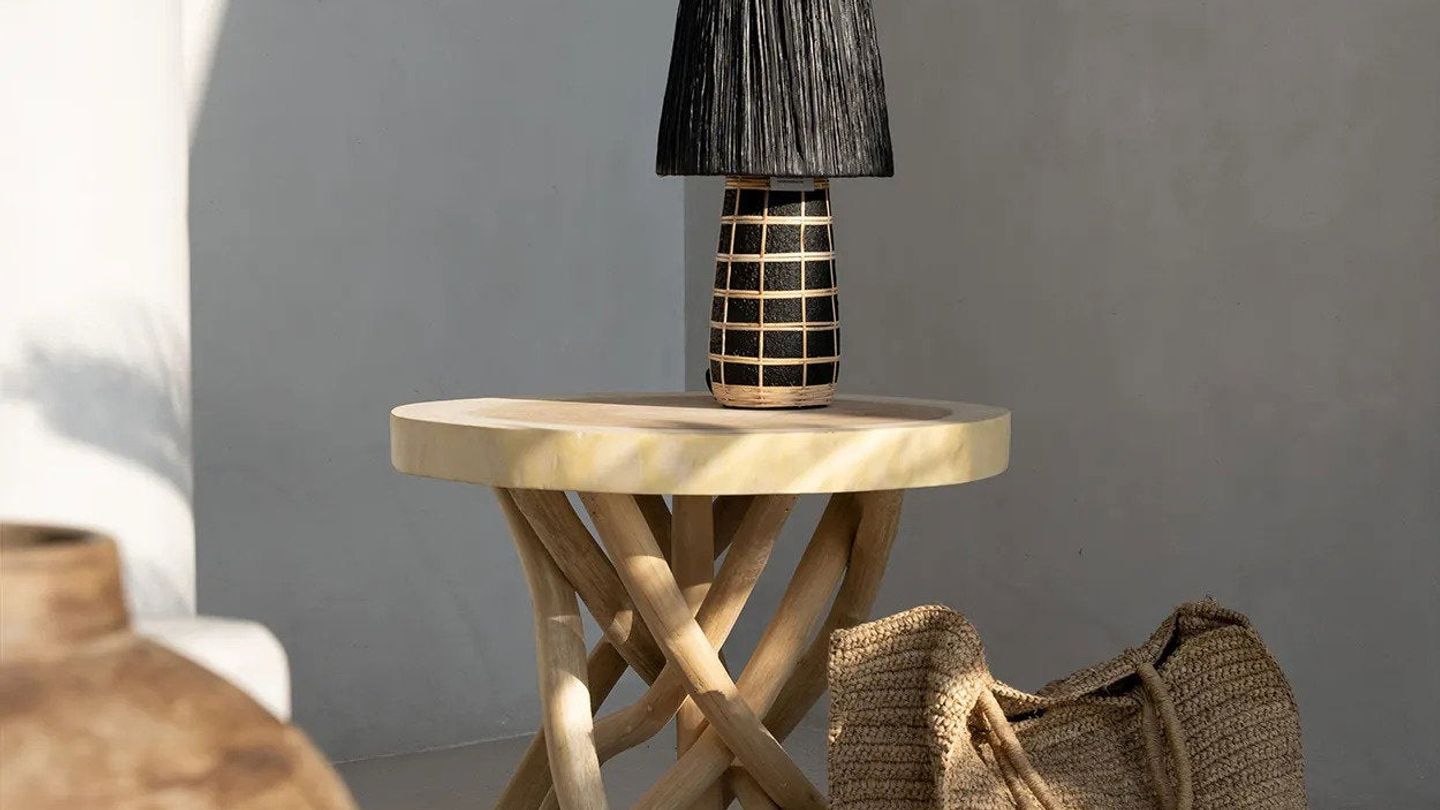
At Evervida, every piece in our collection is made from solid natural wood, chosen for longevity, sourced responsibly, and designed to be the last table or lamp you ever need to buy for that spot in your home.
When Does MDF Make Sense?
In the interest of honesty: MDF is not always the wrong choice. For painted built-in cabinetry, workshop furniture, or temporary solutions where budget is the primary constraint, it serves a purpose. The problem is when it is sold - often deceptively - as a premium or long-lasting product at a price point that implies durability it cannot deliver.
If you are furnishing a room you intend to live in for years, buying one solid wood piece is almost always more economical over time than replacing an MDF equivalent twice or three times.
What to Look for When Buying Solid Wood Furniture
Not everything labelled "wood" is solid wood. Watch out for these terms:
- "Wood effect" or "wood finish": MDF or particleboard with a printed or veneered surface
- "Engineered wood": usually MDF or plywood - not solid wood
- "Solid wood frame": the frame may be solid wood but the panels, shelves, or top may not be
- "Acacia wood" or "mango wood": genuinely solid wood, though often lower grade - check the construction carefully
The clearest sign of solid wood is weight, grain variation, and a price that reflects the material honestly.
Built to Last, by Design
At Evervida, we believe furniture should be bought once and kept for life. Every piece in our collection is solid natural wood — no MDF, no veneers, no shortcuts. Because the most sustainable piece of furniture is always the one you never have to replace.
Explore our solid wood furniture collection → Here