Coffee Tables for Small Living Rooms: Size Guide
Coffee Tables for Small Living Rooms: How to Choose the Right Size
If your living room is on the smaller side, choosing the wrong coffee table can make the whole space feel cramped and cluttered. The good news is that with a few simple sizing rules, you can find a coffee table that fits perfectly - and actually makes your room feel bigger.
Why Size Matters More Than Style
Most people choose a coffee table based on how it looks. But in a small living room, size and proportion come first. A table that is too large blocks movement, while one that is too small looks out of place and loses its function. Getting the size right first makes everything else - style, material, finish - fall into place naturally.
The Golden Rules for Coffee Table Sizing
Rule 1: Keep it two-thirds the length of your sofa
This is the most reliable sizing rule in interior design. If your sofa is 200 cm long, your coffee table should be around 130 cm. This creates visual balance without overwhelming the space.
Rule 2: Leave at least 45 cm of clearance on all sides
You need to be able to walk around the table comfortably and lean forward from the sofa without strain. 45 cm is the minimum. If your room is very tight, go lower with the table height rather than reducing the clearance — it keeps the room feeling open.
Rule 3: Match the table height to your sofa cushions
Your coffee table should sit at the same height as — or slightly lower than — your sofa seat cushions. This is typically between 40 and 50 cm. Too high and it feels like a dining table. Too low and it becomes unusable.
Rule 4: In a small room, go round or oval
Square and rectangular tables have corners that eat into circulation space. Round and oval coffee tables remove that problem entirely and make a small living room feel more relaxed and spacious.
The Best Coffee Table Materials for Small Spaces
In a small living room, the material and visual weight of your coffee table matters as much as the dimensions.
Solid wood is the most timeless choice. A solid oak or walnut coffee table adds warmth and natural texture without visually heavying the space — especially in lighter tones. It also lasts decades, making it a far better investment than flat-pack alternatives.
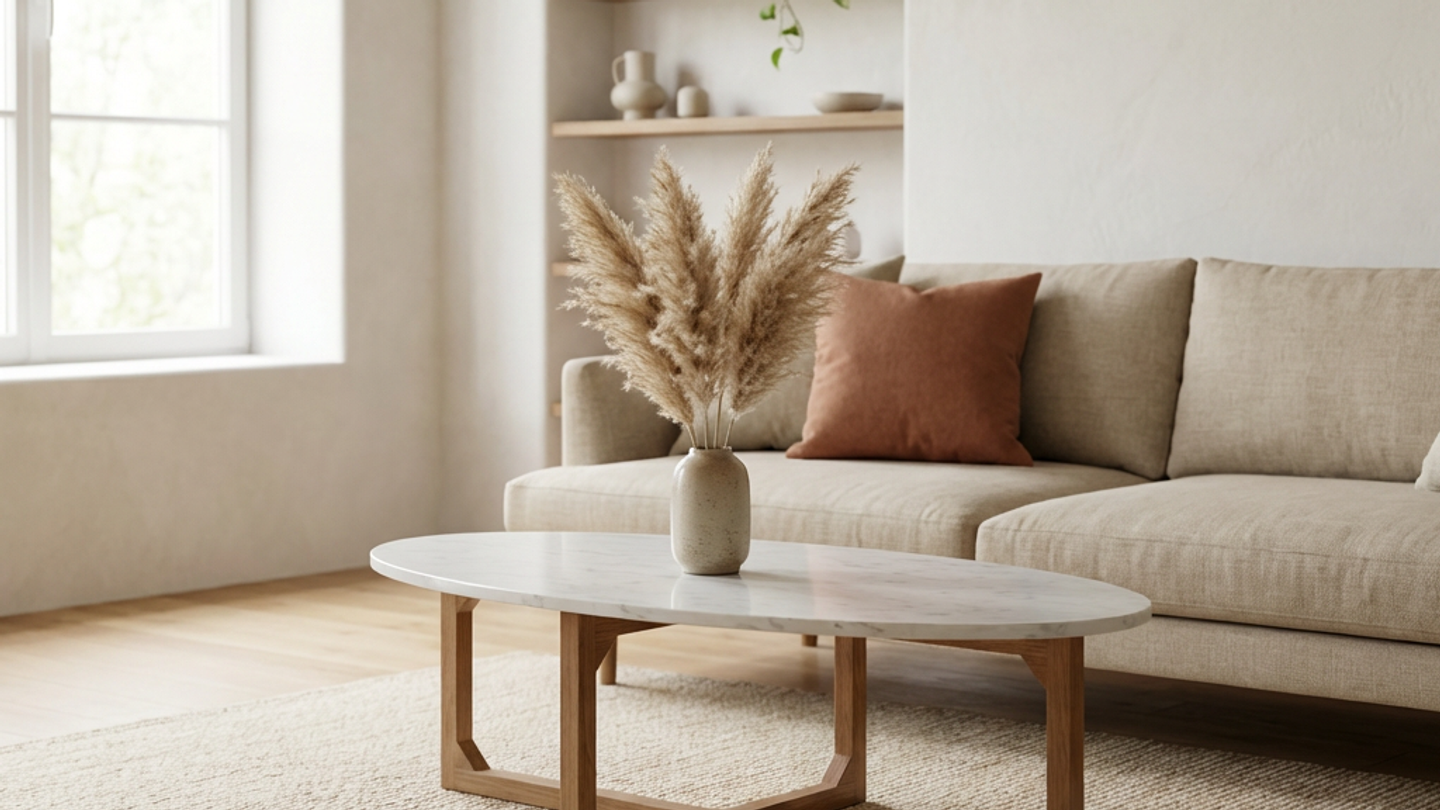
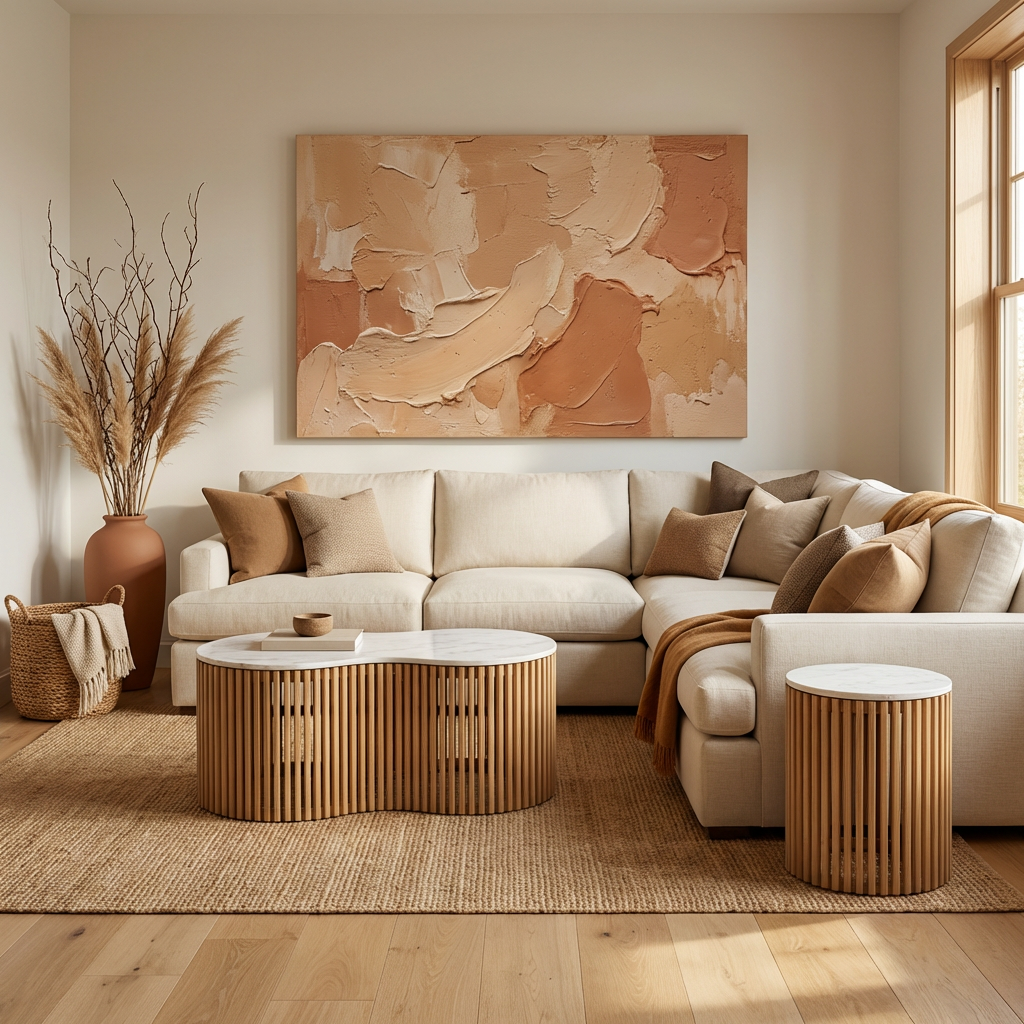
Marble tops bring a sense of luxury and natural beauty to a living room, and no two slabs look exactly the same - which makes each piece feel unique. In a small space, a marble-top coffee table works best when the base is slim and light, so the visual weight of the stone does not overwhelm the room. Marble pairs especially well with warm wood tones, linen, and natural textures, making it a strong fit for Evervida's aesthetic. The main considerations are weight (marble is heavy, so moving it around is not easy) and care - it needs sealing to resist staining and is sensitive to acidic liquids like wine or coffee. For everyday family use, a honed matte finish is more forgiving than a polished one.
Rattan and woven materials are lightweight visually and physically, ideal for smaller rooms where you want texture without bulk.
For a natural, sustainable living room, a solid wood coffee table in a light or mid-tone finish is almost always the best choice.
What to Avoid in a Small Living Room
- Oversized storage ottomans: they solve one problem (storage) and create another (visual bulk)
- Very dark finishes in a poorly lit room: they absorb light and make the space feel smaller
- Tables with thick, heavy bases: the legs and base of a table determine how "heavy" it looks. Tapered or slender legs keep a room feeling light
- Matching sets that are too uniform: a room where everything matches perfectly often feels more like a showroom than a home
Finding the Right Coffee Table for Your Space
At Evervida, all our coffee tables are made from solid natural wood, designed to bring warmth and character to living rooms of every size. Whether you have a compact apartment or a generous open-plan space, you will find options that are sized for real homes — not showrooms.
Explore our coffee table collection → Here